
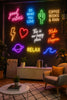
How to Choose Neon Sign Colors: A Complete Guide
, by Freedom Neon, 15 min reading time
, by Freedom Neon, 15 min reading time
Not sure which neon sign color to choose? This complete guide explains how to match colors with your brand, space, background, and mood, plus the best pairings for homes, shops, restaurants, bars, gyms, weddings, and more.
Before placing your order, you may be asking yourself:
I love pink, but will it actually look good in my space?
I want a neon sign for my shop. Which color will attract the most customers?
I have saved hundreds of inspiration photos, but I still cannot tell why some signs look polished while others feel chaotic.
The right color can transform a space. The wrong one can weaken even a strong design.
This guide brings together what we have learned from years of helping customers choose neon signs: the core rules of color selection, how each of our 13 colors performs in different settings, which combinations work best, and which ones are better avoided. By the end, you will have a clear path to choosing the right color for your sign.
Before we talk about room styles, scenes, or pairings, one rule matters most:
If you are a business owner with an existing logo or brand color, your neon sign should match your brand color first.

A neon sign is not just decoration. It is part of your visual identity. If your cafe's brand color is warm white but your main sign is bright pink, customers will notice the disconnect. The space may still look interesting, but the brand impression becomes less consistent.
Our 13 neon colors cover most common brand color needs:
| Your Brand Color | Recommended Neon Color | Example Brands |
|---|---|---|
| Red | Red | KFC, Coca-Cola |
| Orange | Orange | Amazon, Harley-Davidson |
| Blue | Blue | Samsung, Visa |
| Green | Green | Subway, Starbucks |
| Pink | Pink | T-Mobile, Barbie |
| Golden Yellow | Golden Yellow | IKEA, Snapchat |
| Cream / Off-white | Warm White | Specialty coffee, health food |
| Purple | Purple | Cadbury, Hallmark |
If your brand color does not have a direct match in our range, contact us. We can help you find the closest option.
The scene-by-scene recommendations in this guide are best for personal use, home decor, or businesses without a fixed brand color. If you already have an established brand color, use that as your starting point.
Once you have chosen your main color, it can be tempting to add more. Neon colors are eye-catching, so why not use several?
The answer is simple: fewer colors usually create a stronger result.

We recommend using no more than 3 colors in one space. A reliable ratio is:
When a space uses too many colors without a clear hierarchy, everything competes for attention. The result feels noisy, and no single element stands out.
White is the most versatile color in our range and one of our most popular choices. It is clean, modern, neutral, and easy to use in almost any space.
Best for: Office brand walls, clothing store windows, barbershop signs, minimalist home decor, modern weddings
Key tip: White has excellent clarity against dark backgrounds, making it ideal for text-based signs. On white walls, the halo effect is subtle, so pair it with a darker background when you want a stronger glow.
Warm white has the clarity of white with a softer, more inviting tone. It feels like candlelight or an old photograph: warm, human, and elegant.
Best for: Wedding welcome signs, specialty cafes, light-fare restaurants, living room decor, premium boutiques
Key tip: Warm white pairs beautifully with natural wood, flowers, linen, and soft interiors. It is less suited to spaces with a sharp tech or ultra-modern look.
Light pink is soft, gentle, and dreamlike. Compared with pink, it is less assertive, which makes it better for atmosphere than for high-impact signage.
Best for: Girls' bedrooms, nail salon accent lighting, flower shop windows, children's clothing store accents
Key tip: Light pink works beautifully for girls' names, bedroom name signs, and soft decorative text. Because its brightness is gentler than stronger colors like pink or lemon yellow, it is best for close-view signs, background glow, decorative lighting, or soft accents rather than long-distance storefront signage.
Pink is bold, direct, and full of personality. It is one of the most visually striking warm colors and glows especially well against dark backgrounds.
Best for: Girls' bedroom signs, photo wall backdrops, nail salon signage
Key tip: Pink is strong enough to stand on its own. If you want to pair it with another color, purple and white are the safest choices.
Red is the most classic neon color. It goes back to the early 20th-century streetscapes that made neon famous, and it remains the most recognizable "neon" choice.
Best for: Bar signs, vintage American diners, fast food branding, barbershops when paired with blue, garages
Key tip: Red can feel too aggressive or inexpensive in Western-style weddings and high-end fashion boutiques. Avoid it in those settings.
Blue feels steady, professional, and trustworthy. It is one of the world's most widely used brand colors, and color psychology often links it with calm, authority, and reliability.
Best for: Banks, investment firms, insurance companies, tech company brand walls, offices, boys' bedrooms with gaming or tech themes
Key tip: Blue is the go-to color for finance because it helps create a calm and trustworthy atmosphere. Avoid using blue as the dominant color in restaurants or food-focused spaces, since blue is uncommon in natural foods and can suppress appetite.
Ice blue is brighter, cooler, and more futuristic than standard blue. It has a cyberpunk quality that works especially well in gaming and technology-themed spaces.
Best for: Gaming rooms, esports workstations, tech showrooms, boys' bedrooms
Key tip: Ice blue on a black background is a complete look on its own. It needs very little support to feel sharp and intentional.
Also known as marrs green, mint green is the freshest and most soothing green in our range. It combines the natural feeling of green with a bright, vivid glow.
Best for: Bubble tea and beverage brands, plant-focused flower shops, yoga studios, meditation rooms, organic or natural beauty brands
Key tip: Mint green works especially well in yoga and meditation spaces. It delivers the calming quality of green without the heaviness of darker greens, keeping the room bright and open.
Purple feels mysterious, dramatic, and premium. It is one of the most distinctive colors in our range, and when used carefully, it can instantly elevate a space.
Best for: Girls' bedrooms when paired with pink, premium beauty brands, independent bars, creative studios
Key tip: Purple carries strong visual weight. In large areas, it can feel heavy or oppressive. Use it as a secondary color or accent rather than the dominant color. It pairs most naturally with light pink or pink.
Lemon yellow is the brightest color in our range. It remains highly visible in almost any lighting condition, even in a storefront window with direct sunlight.
Best for: Children's clothing stores, kids' rooms, spin and cycling studios as an accent, youth and lifestyle brands
Key tip: Lemon yellow is a strong choice for children's spaces because children respond well to high-brightness colors, and yellow communicates happiness, energy, and playfulness.
Golden Yellow is warmer and more composed than lemon yellow. It carries a sense of luxury, nostalgia, and refinement.
Best for: Upscale bars, whiskey bars, wine bars, wedding accents, high-end restaurants, premium boutiques
Key tip: Golden Yellow paired with warm white is one of the most elegant two-color combinations we offer. Use it when you want the space to feel refined and luxurious.
Orange is energetic, warm, and appetite-stimulating. It is an ideal color for fast food, barbecue, sports, and fitness-related spaces.
Best for: Fast food restaurants, BBQ spots, cycling studios, sports brands, creative studios
Key tip: Orange and red together are one of the most effective appetite-stimulating combinations in the food industry. Humans naturally form positive associations with red-orange foods.
This is our green: bright, saturated, and unmistakably neon. It is a classic choice for bars, gaming spaces, garages, and streetwear brands.
Best for: Bars, Open signs, gaming rooms, racing-themed garages, streetwear and lifestyle brands
Key tip: Green commands attention immediately, so a small amount goes a long way. Pair it with white or warm white when you want the design to feel clean, readable, and balanced.

1. Pink x Ice Blue
This is one of our most popular two-color combinations and a defining palette for Y2K-inspired spaces. Let pink lead at about 70%, with ice blue as a 30% accent. Keep a dark gap between the two colors, because direct contact can create visual vibration. A black or dark background helps both colors glow at the same time.
Best for: Girls' bedrooms, photo wall backdrops, Y2K-themed spaces
2. Green x White / Warm White
Green is bold and energetic on its own, so it works best with a neutral partner. Use green for the main icon, outline, or accent, then use white or warm white for text to keep the sign clear and easy to read. White creates a sharper, more modern look, while warm white softens the overall effect.
Best for: Bars, gaming rooms, garages, streetwear stores
3. Red x Blue
This is the classic American neon pairing, with strong 1950s vintage energy. Use red for the main sign body and blue for borders, outlines, or lower accent strips. Both colors glow powerfully against dark backgrounds.
Best for: Bars, vintage American restaurants, barbershops
4. Orange x Blue
Orange and blue are complementary colors with strong energy and direct visual impact. Use orange for the main text and blue for borders or background lighting. This combination is built for visibility, making it ideal for storefronts that need to be seen from a distance.
Best for: Sports brands, fast food storefronts
5. Blue x Lemon Yellow
Blue and lemon yellow create a bright, confident contrast that feels modern, energetic, and easy to notice. Do not use them in a 50/50 ratio. Let blue take the lead at about 70% to 80%, then use lemon yellow as a 20% to 30% accent for icons, highlights, small text, or outline details.
Best for: Kids' brands, sports spaces, gaming rooms, youth lifestyle stores
6. Pink x Light Pink x Purple
This three-color gradient transitions naturally without feeling forced. Use light pink for ambient glow, pink for the primary sign, and purple as a small accent. It pairs beautifully with white surfaces, mirrors, and glossy finishes.
Best for: Beauty stores, girls' bedrooms, wedding dessert tables
7. Orange x Golden Yellow x Lemon Yellow
This warm-color system feels energetic without becoming harsh. Use orange for the main sign, golden yellow as support, and lemon yellow as a finishing accent. It works best in well-lit spaces.
Best for: Cafes, restaurants, seasonal and holiday decor
8. Blue x Ice Blue
These two cool blues create a layered and harmonious look. Use blue for the primary text and ice blue for background light strips. Add a touch of white if you want to brighten the overall effect.
Best for: Tech showrooms, gaming desks, modern living rooms
9. White x Ice Blue
This is our cleanest and most minimal pairing. Use white for text and ice blue for decorative lines or backlighting. Against a black background, both colors feel crisp and controlled without competing for attention.
Best for: Minimalist bedrooms, bathrooms, office spaces
10. Warm White x Golden Yellow
This is our most elegant warm-color pairing. Use warm white for the main text and golden yellow for borders or decorative accents. It also works well on light backgrounds and wood surfaces.
Best for: Weddings, upscale restaurants, premium boutiques
11. Mint Green x White
Fresh and restorative, this pairing is ideal for natural, wellness, and lifestyle brands. Use mint green as the primary color and white for supporting text.
Best for: Cafes, flower shops, health and wellness brands
Pink + Orange: Two high-saturation warm colors placed together can feel visually noisy. The red-orange collision often reads as cheap or chaotic.
Green + Lemon Yellow: Two extremely bright colors together do not create enough contrast. Instead, they can wash each other out and reduce the transparent glow that makes neon beautiful.
Ice Blue + Purple: When used as equal co-leads, these two cool colors can make a space feel cold and flat.
Green + Red: Green and red can easily feel overly festive or visually tense when both colors are used at full strength. If you use this pairing, avoid a 50/50 ratio.
Four or more colors at the same time: Using more than 3 colors without a clear visual hierarchy usually leads to visual clutter. If you need to use 4 or more colors, add white to create breathing room.
These combinations are not absolute mistakes. With the right ratio, enough spacing, and a neutral balancing color, even high-risk pairings can still work.
Girls' Bedroom: Primary colors: light pink, pink, purple. Use white as support. Light pink works well for ambient strips, while pink works better for text-based signs such as names or quotes.
Boys' Bedroom: Primary colors: white, blue. Use warm white and ice blue as support. Blue and ice blue suit gaming and tech-inspired rooms, especially when paired with black or dark gray walls.
Kids' Room: Start with the child's preferences. Younger children usually respond best to high-brightness colors such as lemon yellow and light pink. For children's spaces, we strongly recommend LED flex neon over traditional glass tubes because it is significantly safer.
Garage: Primary colors: white, red, blue. Use golden yellow and orange as support, with green as an accent. A dark background such as black or dark gray is standard because it maximizes glow.
Office / Brand Wall: Primary colors: white, warm white. Use blue as support. White feels professional and works well for tech, finance, and legal firms. Warm white suits creative agencies.
Financial Industry (Banks, Investment Firms, Insurance): Primary color: blue. Use white and ice blue as support. Avoid red and orange, which can suggest risk, urgency, or loss.
Bar / Lounge: Primary colors: red, green, golden yellow. Use blue and orange as support. Red is the most traditional bar neon color. Green works perfectly for Open and Bar signs.
Barbershop: Primary colors: white, red, blue. For contemporary minimalist shops, choose white. For a classic look, use red + blue.
Restaurants (Fast Food, BBQ, Bold Flavors): Primary colors: red, orange. Use golden yellow and lemon yellow as support. Red + orange is one of the most effective appetite-stimulating combinations.
Restaurants (Cafe, Light Food, Japanese): Primary color: warm white. Use white and golden yellow as support. Avoid bright or highly saturated colors.
Restaurants (Bubble Tea / Beverages): Primary colors: mint green, lemon yellow. Use light pink as support.
Clothing / Shoe Stores: Primary color: white. Neon lighting should not distort how customers see product colors. Colored neon works better on brand walls, photo areas, and decorative corners.
Children's Clothing Stores: Primary color: lemon yellow. Use light pink and mint green as support. Avoid dark or deep colors.
Nail Salons / Beauty Studios: Primary colors: light pink, pink. Use red and mint green as support. Avoid orange and yellow, which can clash with skin tones.
Flower Shops: Primary colors: pink, light pink. Use mint green and warm white as support, with purple as a small accent. Avoid red and orange.
Gym (Strength / General Training): Primary colors: white, red. Use orange as support.
Gym (Cardio / Spin Studio): Primary colors: orange, red. Use lemon yellow as support.
Yoga Studio / Meditation Room: Primary colors: mint green, white. Use warm white and light pink as support. Avoid saturated, dark, or aggressive warm colors.
Weddings: Primary colors: warm white, white. Use light pink as support and golden yellow as a small accent. For Western-style weddings, avoid red.
1. Do I have a brand color?
Yes: Find the closest match among our 13 neon colors.
No: Use the scene guide and your personal preference as your starting point.
2. Is my background wall dark or light?
Dark: Almost any color will glow strongly, so you can be bolder.
Light: Choose white, warm white, or a high-brightness color.
3. Am I creating a focal point or an atmosphere?
Focal point (logo or text sign): Choose a high-contrast color and keep the design to 1 or 2 colors.
Atmosphere (light strips or ambient glow): You can use softer saturation or blend multiple colors gradually.
Still not sure? Send us a photo of your space, and we will give you a specific color recommendation.


